An acromioclavicular (AC) joint injury—often referred to as a shoulder separation—occurs when the ligaments connecting the collarbone (clavicle) to the shoulder blade (acromion) are stretched, partially torn, or completely ruptured. This commonly results from direct falls onto the shoulder, sports impacts, or vehicle trauma. At Oasis Hospital Kalyan, Dr. Rajesh Pakhare specializes in arthroscopic and minimally invasive AC joint stabilization to realign the clavicle, reconstruct torn coracoclavicular (CC) ligaments, and eliminate chronic shoulder weakness and deformity.
Best For: Acute Grade III, IV, or V complete AC joint dislocations and CC ligament tears treated within 3 to 4 weeks of injury.
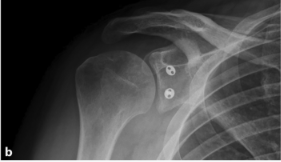
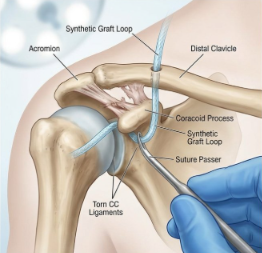
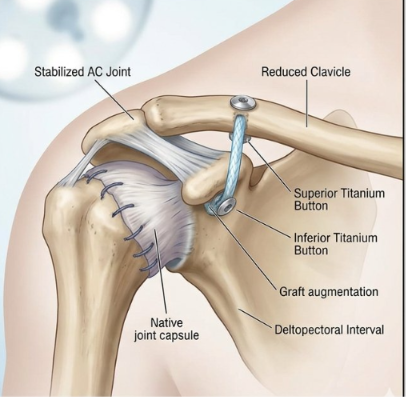
Procedure: Utilizing minimally invasive keyhole arthroscopy, small bone tunnels are drilled through the clavicle and coracoid process. A construct of continuous high-strength suture loops and titanium buttons is passed through and tensioned, bringing the collarbone back down into its natural anatomical socket.
Benefit: Re-establishes anatomical reduction without rigid metal implants, eliminates the need for a secondary hardware-removal surgery, and allows the native coracoclavicular (CC) ligaments to heal biologically.
Best For: Chronic AC joint separations (older than 4 to 6 weeks), failed previous primary repairs, or persistent multidirectional shoulder instability where native ligaments have scarred or resorbed.
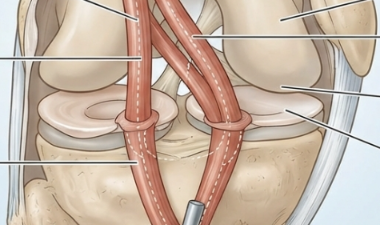
Procedure: A biological tendon graft (hamstring autograft or donor graft) is routed through anatomical bone tunnels in the clavicle and around the coracoid process, secured rigidly with bio-composite interference screws to reconstruct both the conoid and trapezoid ligament bands.
Benefit: Provides a permanent, living biological scaffold that remodels over time, restoring full vertical and horizontal shoulder stability when damaged native tissue can no longer heal naturally.
Best For: Severe lateral-end clavicle fractures paired with AC joint disruption, or complex acute dislocations with inadequate coracoid bone stock.
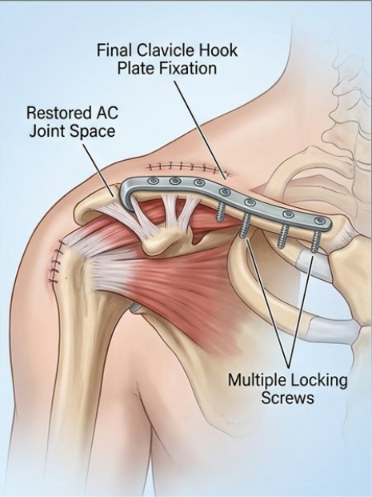
Procedure: A specially contoured titanium or stainless steel plate is screwed onto the superior surface of the lateral collarbone, featuring a smooth hook extension that passes beneath the acromion process to lever and hold the joint in place.
Benefit: Delivers immediate, rigid mechanical stability capable of withstanding dynamic shoulder loads, allowing bone and periarticular soft tissues to consolidate without displacement.
AC (Acromioclavicular) Joint Repair Surgery is an orthopaedic procedure designed to stabilize and realign the junction between the collarbone (clavicle) and the shoulder blade (acromion) following a severe injury or dislocation, commonly termed a shoulder separation.
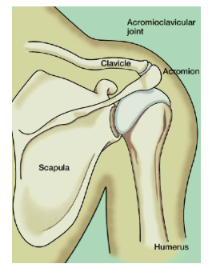
The AC joint sits at the very top of the shoulder. It is held in position by two sets of ligaments:
Acromioclavicular (AC) Ligaments: Provide horizontal (front-to-back) stability.
Coracoclavicular (CC) Ligaments: Strong primary suspensory ligaments (conoid and trapezoid) that secure the collarbone downward to the coracoid process, preventing vertical displacement.
High-Grade Joint Dislocation (Rockwood Grades III to V): Complete rupture of both AC and coracoclavicular (CC) ligaments resulting in a noticeable step-off deformity where the collarbone visibly juts upward.
Severe Loss of Overhead Strength: Persistent weakness, rapid fatigue, or arm instability during heavy pushing, pulling, or overhead lifting activities.
Chronic Localized Shoulder Pain: Persistent aching, clicking, or deep joint pain that radiates to the neck and upper back due to abnormal compensatory muscle strain.
Demanding Athletic & Physical Work: Manual laborers, overhead workers, and contact sports athletes requiring full, uncompromised structural shoulder strength and stability.
Failed Conservative Management: Patients with lingering functional impairment or scapular dyskinesis (abnormal shoulder blade movement) after weeks of non-surgical rehabilitation.
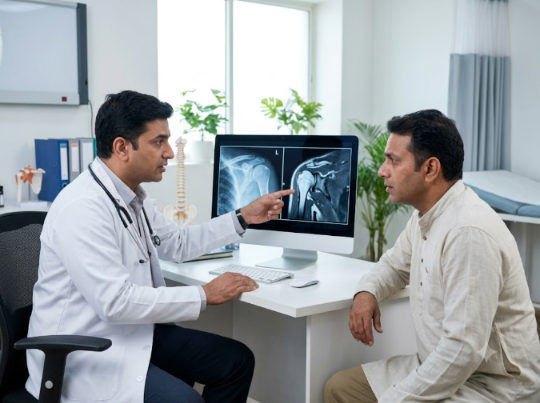
Accurate diagnosis and anatomical planning are vital before proceeding with AC joint repair. At Oasis Hospital Kalyan, the pre-operative process includes high-resolution digital bilateral Zanca-view X-rays to assess vertical displacement and shoulder asymmetry. An MRI is conducted to evaluate concomitant soft-tissue pathology, including coracoclavicular (CC) ligament tears and possible rotator cuff involvement. Dr. Rajesh Pakhare reviews the imaging findings in detail with the patient, followed by pre-anaesthesia clearance, blood investigations, and personalized pre-operative guidance to ensure total surgical readiness.
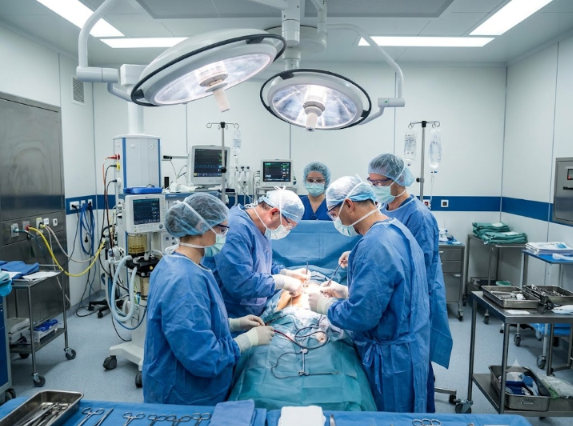
Performed under a regional interscalene nerve block combined with general anaesthesia for optimal pain control, the procedure begins with arthroscopic visualization of the shoulder joint and subacromial space. Precise anatomical bone tunnels are drilled through the clavicle and the coracoid process. Utilizing advanced suture-button fixation (TightRope) or a biological tendon graft, the displaced clavicle is brought down into anatomical alignment with the acromion. Tension is locked securely, providing rigid mechanical stability while the ligament heals, and incisions are closed with cosmetic sutures.
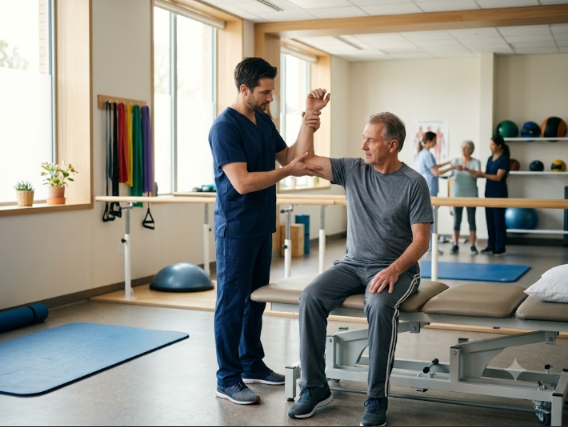
Recovery focuses on protecting the surgical construct while progressively restoring shoulder motion. Immediately following surgery, the arm is secured in a protective immobilizer sling for 4 to 6 weeks. Under our supervised rehabilitation protocol at Oasis Hospital, guided passive range-of-motion and pendulum exercises start early, preventing joint stiffness. As healing progresses, therapy transitions to active-assisted movements, scapular stabilization, and targeted rotator cuff strengthening to ensure full return to overhead activities and sports.
At Oasis Hospital Kalyan, our orthopaedic and sports medicine department is dedicated to restoring full mobility, strength, and confidence to patients suffering from complex joint injuries. Led by Dr. Rajesh Pakhare, an accomplished specialist in orthopaedic trauma and minimally invasive arthroscopic reconstructions, we offer comprehensive evaluation, advanced keyhole surgical techniques, and tailored rehabilitation programs.
Happy Patients
Surgeries Done
Qualified Staff
Awards Achieved
Meet our team of skilled Gynecologists and healthcare professionals, committed to your well-being.
Your health is our priority. We take the time to listen, understand, and provide personalized care that addresses your unique needs.
Our clinic is equipped with state-of-the-art facilities, ensuring you receive the highest quality care in a comfortable setting.


Neurologist

"I recently underwents a minimally invasives procedureds at Mediax Gynecology, and the entired experience exceeded my expectations. The surgeon and the entire teams were attentived, explainings every step of the process. The recovery was smooth, and I felt well-cared-for throughout."

Physiotherapist

"The family plannings services at Mediax Gynecology are top-notch. The consultation was comprehensive, and the team took the time to understands our family plannings goals. The supports and guidance provideds were invaluable, and we felts confidents in our decisions."